

Amitabha Buddha Thangka | Pure Land Sukhavati | Natural Mineral Colors and 24k Gold
Amitabha Buddha Thangka | Pure Land Sukhavati | Natural Mineral Colors and 24k Gold
Low stock
Couldn't load pickup availability
- 100% Encrypted Transaction
- Strong Secure Packaging
- Worldwide Shipping
 100% Authentic & Genuine
 24K Gold Embellished
 Ethically Handmade


To customize your Thangka, please contact us.
Description:
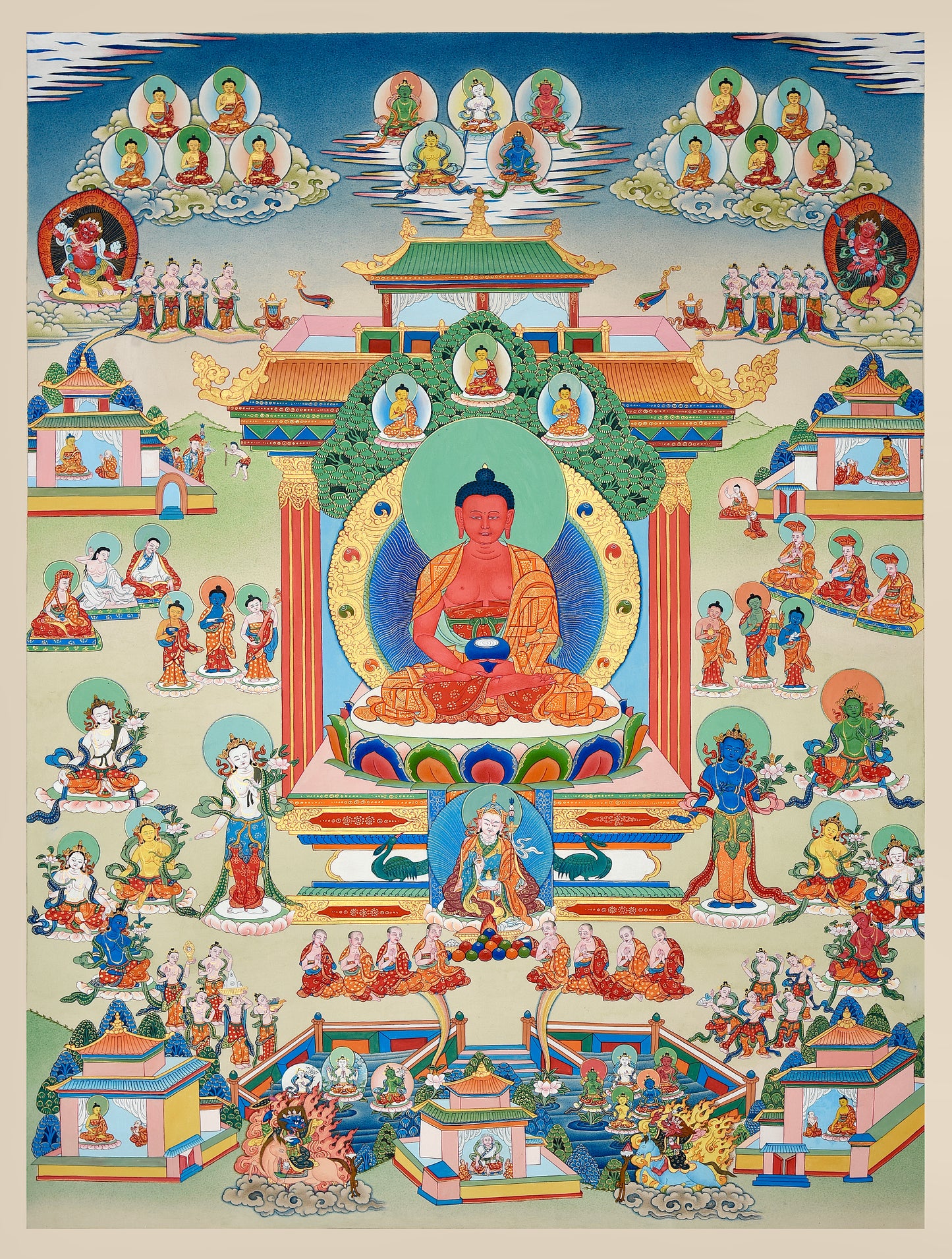
Amitabha Buddha Thangka | Pure Land Sukhavati | Natural Mineral Colors and 24k Gold
Enter the realm of infinite light and boundless compassion with this exquisite depiction of Amitabha Buddha in Sukhavati, the Western Pure Land. This masterfully crafted thangka portrays the Buddha of Infinite Light seated in serene meditation upon a luminous lotus throne, embodying the promise of liberation and enlightenment. Amitabha's Pure Land represents the ultimate sanctuary where all beings can cultivate the Dharma without obstacles, progressing swiftly on the path to awakening.
Surrounding the central figure are eight great Bodhisattvas—Manjushri (wisdom), Chenrezig (compassion), Maitreya (loving-kindness), Samantabhadra (aspiration), Kshitigarba (vow power), Akashagarbha (boundless space), Vajrapani (spiritual strength), and Sarvanivaranavishkambhin (removal of obstacles)—each radiating their unique qualities to guide practitioners toward enlightenment. The celestial architecture of Sukhavati unfolds in magnificent detail, featuring jeweled palaces, wish-fulfilling trees, and crystalline pools of eight auspicious qualities, all rendered in the refined Karma Gadri tradition.
Product Specifications:
Materials: Genuine 24k Gold, Traditional Natural Mineral Pigments
Canvas: Premium Cotton Canvas
Technique: Traditional Hand-Painted by Master Thangka Artists
Style: Authentic Karma Gadri School
Origin: Handcrafted in Nepal
Sacred Symbolism:
Dhyana Mudra: Amitabha's meditation gesture represents perfect concentration and inner peace
Lotus Throne: Symbolizes purity rising from the waters of samsara
Red & Gold Palette: Embodies the warmth of compassion and the luminosity of wisdom
Pure Land Architecture: Depicts the magnificent realm free from suffering
Spiritual & Practical Benefits:
Powerful Meditation Focus: Supports visualization practice and aspiration for rebirth in Sukhavati
Devotional Support: Deepens connection to Amitabha Buddha and Pure Land teachings
Authentic Craftsmanship: Created using centuries-old techniques with natural mineral pigments and genuine gold
Sacred Space Enhancement: Transforms your meditation room, altar, or spiritual sanctuary
Timeless Heirloom: Museum-quality artwork that can be treasured for generations
Care & Preservation:
Maintain the sacred beauty of your Amitabha Buddha Thangka with proper care:
Frame with traditional silk brocade mounting for authentic presentation and protection
Display away from direct sunlight to preserve the natural pigments
Keep in a dry environment; avoid exposure to moisture and humidity
Cover with a silk cloth when not in active use for meditation
Handle with clean hands and inspect mountings periodically
Understanding Thangka Art:
Thangkas are sacred scroll paintings central to Tibetan and Himalayan Buddhist practice. More than mere artwork, they serve as windows into enlightened realms, meditation supports, and teaching tools. Each thangka is created through meticulous ritual preparation and precise iconographic guidelines, transforming canvas into a consecrated object that carries spiritual blessings. The vibrant mineral pigments and gold used in traditional thangkas are believed to embody the pure qualities of enlightened beings.
The Karma Gadri Tradition:
Originating in the 16th century under the patronage of the 8th Karmapa Mikyö Dorje, the Karma Gadri style represents one of the most refined approaches to thangka painting. This school is distinguished by its elegant composition, masterful use of shading, harmonious color relationships, and spiritual subtlety. Unlike more ornate styles, Karma Gadri emphasizes graceful simplicity and meditative tranquility, making it exceptionally suitable for contemplative practice. The style beautifully synthesizes Tibetan precision, Indian classical aesthetics, and Chinese artistic sensibilities into a uniquely contemplative visual language.